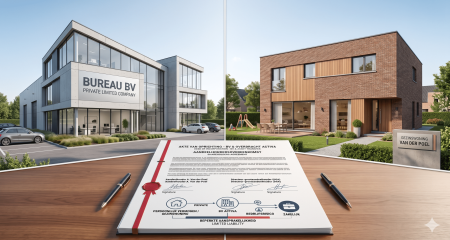
You can start a divorce in the Netherlands even if you have nowhere else to live. During the proceedings you can ask the court for a provisional measure that gives you the exclusive use of the family home, and the court can grant it even if the home belongs to your spouse alone.
After the divorce, you can ask to continue living in the home for six months. Neither arrangement decides who ultimately keeps the house. That depends on your property regime and, in practice, on whether the mortgage lender will release one of you from the mortgage.
Can you stay in the family home while the divorce is pending?
Yes. As long as you are married, both of you are entitled to live in the family home, whoever owns or rents it. If living together is no longer possible, the court can decide who may use the home until the divorce is final.
This decision is a provisional measure (voorlopige voorziening) under Article 822 of the Dutch Code of Civil Procedure (Rv). Your lawyer files the request with the district court (rechtbank), usually together with or shortly before the divorce petition. The court holds a short hearing and gives a decision that applies for the duration of the divorce proceedings.
Ownership is not decisive. The court weighs the interests of both spouses and gives considerable weight to where the children will live, because they benefit from staying in familiar surroundings. The court also looks at who can more easily find other accommodation, for example because that spouse has a higher income or can stay with family.
Can your spouse lock you out or sell the house?
No. Your spouse cannot simply change the locks and keep you out while you are married. And under Article 1:88 of the Dutch Civil Code (BW), a spouse needs your consent to sell, rent out or end the tenancy of the family home, even if the home is in their name only.
If there is domestic violence or a serious threat of it, the mayor can impose a temporary restraining order (tijdelijk huisverbod). This order requires the person concerned to leave the home for ten days and can be extended to a maximum of four weeks. It is separate from the divorce and can be imposed quickly, often with the police involved.
Can you stay in the home after the divorce?
Yes, for a limited time. Under Article 1:165 BW the court can grant you the right to continue living in the family home for six months after the divorce has been registered, even if the home belongs to your former spouse or to both of you.
You must make this request in the divorce proceedings. It is not granted automatically. The court again weighs both sides and often looks at the children. The six months give you time to find other accommodation, but they do not change who owns the house or who has to pay the mortgage or the rent.
Што ако го изнајмувате вашиот дом?
If you are married and live in a rented home, you are both tenants by law, even if only one of you signed the lease (Article 7:266 BW). In the divorce the court can decide which of you will continue the tenancy. The other spouse then ceases to be a tenant.
The court looks at the same kind of factors: the children, the financial position of each spouse and who has the better prospect of finding other accommodation. The landlord cannot prevent this decision, but the spouse who stays must of course be able to pay the rent.
Who keeps the house in the end?
That depends on your property regime and on the finances. If the house falls into a community of property, it is divided in equal shares, under Article 1:100 BW, unless you agree otherwise.
Couples who married on or after 1 January 2018 without a prenuptial agreement (huwelijkse voorwaarden) have a limited community of property. Assets that one of you owned before the marriage remain that spouse’s own property. Couples who married before 2018 without a prenuptial agreement generally have a full community of property, which also includes assets from before the marriage. A prenuptial agreement can change all of this, so check yours carefully.
Once you know what belongs to whom, there are three common outcomes. You sell the house and divide the proceeds or the remaining debt. One of you takes over the house and pays the other their share. Or you keep the house jointly for a period, for example until the youngest child finishes primary school, and sell it later on agreed terms.

Why is the mortgage lender so important?
Because you are usually both jointly and severally liable for the whole mortgage. If one of you takes over the house, the lender has to agree to release the other from that liability. The lender only does so if the remaining spouse can carry the mortgage alone.
In practice this is often the real obstacle. A spouse who wants to keep the house but cannot obtain financing will usually have to sell it after all. Contact your lender early, ask for a calculation of what you can borrow on your own income and have the house valued by an independent valuer. If the sale proceeds do not cover the mortgage, the remaining debt is normally shared as well.
Where can you live while you sort things out?
Most people bridge the period with family or friends, a short-term rental or a room. Social housing is an option in the longer term, but waiting lists in many Dutch cities are long.
Some municipalities grant an urgency status (urgentieverklaring) that gives priority for social housing. The rules differ per municipality, and a divorce on its own is often not enough to qualify. Circumstances such as caring for children without suitable housing or domestic violence can weigh in your favour. Ask your municipality which conditions apply where you live.
When you move, register your new address with the municipality within five days. Your registered address affects allowances, taxes and post from the court. If your income drops after the separation, you may also qualify for housing benefit (huurtoeslag) or other allowances from the Tax and Customs Administration (Belastingdienst).
Should you move out before the divorce is settled?
Think carefully before you do. Moving out does not cost you your share in a jointly owned home, but it can make it harder to return, and the court may take the new situation into account when it decides on provisional measures.
If you do move out, for example because staying is no longer workable, record agreements in writing: who pays the mortgage or rent, who pays the fixed charges and when you can collect your belongings. Keep copies of the deed of transfer, the mortgage documents and recent statements.
How can maintenance help you find a new home?
Maintenance can make independent housing affordable. The court can order child maintenance (kinderalimentatie) and spousal maintenance (partneralimentatie), both as a provisional measure during the proceedings and in the final divorce decision.
Spousal maintenance is based on the needs of the recipient and the capacity of the paying spouse. For divorce petitions filed on or after 1 January 2020, the maximum duration is in principle five years, with exceptions for long marriages and for spouses caring for young children (Article 1:157 BW). Child maintenance takes priority over spousal maintenance. Knowing what you can expect helps you decide which housing you can afford.
What if you are an international couple?
Then first check which court has jurisdiction and which law applies to your property. Many expats can divorce in the Netherlands if one or both of them live here, but the property regime may be governed by the law of another country.
For marriages concluded on or after 29 January 2019, the EU Matrimonial Property Regimes Regulation (Regulation (EU) 2016/1103) determines the applicable law; for older marriages, other rules apply. The outcome can affect whether the house is shared at all. If your home is abroad, or your spouse has already started proceedings in another country, get advice quickly, because the court where proceedings are started first can matter.

Што треба да направите сега?
Start by collecting the key documents and getting a clear picture of your finances. Then decide, with your lawyer, whether you need provisional measures or can make agreements with your spouse.
In practice these steps help. Gather the deed of transfer or lease, the mortgage documents, recent salary slips and bank statements. Ask the lender what you could borrow alone, and have the house valued. Talk to your spouse, possibly with a mediator, about who stays in the house during the proceedings. If agreement is not possible, ask your lawyer to request provisional measures. In the divorce petition, also consider a request to use the home for six months after the divorce.
A divorce in the Netherlands always requires a lawyer, because the petition must be filed by a lawyer. Information on the procedure is available from the Dutch judiciary on rechtspraak.nl. For more on divorce, maintenance and children, see our page on закон за семејство.
Во краток преглед
- During the proceedings the court can give one spouse exclusive use of the family home as a provisional measure, even if the other spouse owns it.
- After the divorce you can ask to stay in the home for six months under Article 1:165 BW.
- For a rented home, the court can decide which spouse continues the tenancy.
- Who keeps the house depends on the property regime and on whether the lender releases the other spouse from the mortgage.
- Maintenance, allowances and a municipal urgency status can help you find new housing.
Најчесто поставувани прашања
What can I do if I want a divorce but have nowhere to live?
Ask the court for a provisional measure giving you the exclusive use of the family home during the proceedings, and in the divorce petition ask to stay in the home for six months after the divorce.
Does the spouse who owns the house always get to stay?
No. For the use of the home during and shortly after the divorce, the court weighs the interests of both spouses, especially those of the children. Ownership is not decisive.
Can my spouse sell the house without my consent?
No. Under Article 1:88 BW a spouse needs the other spouse’s consent to sell, rent out or end the tenancy of the family home while the marriage lasts.
Can I take over the house on my own?
Only if you can pay your spouse their share and the mortgage lender agrees to release your spouse from the mortgage. The lender will check whether you can carry the mortgage on your own income.
Law & More assists Dutch and international clients with divorce, provisional measures and the division of the family home.
Не сте сигурни каде се наоѓате? Кажете ни за вашата ситуација. Ќе ве известиме за вашите опции во рок од еден работен ден.
Како Law & More може да ви помогне со ова е објаснето на нашата адвокат за развод страница.